


Description

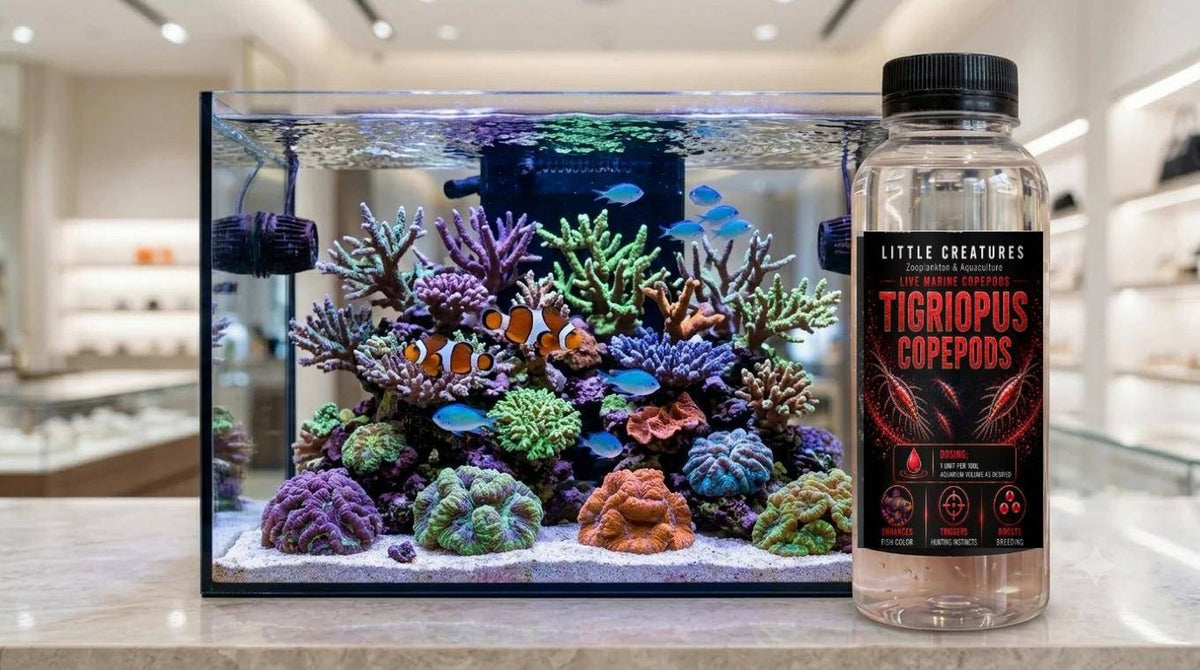
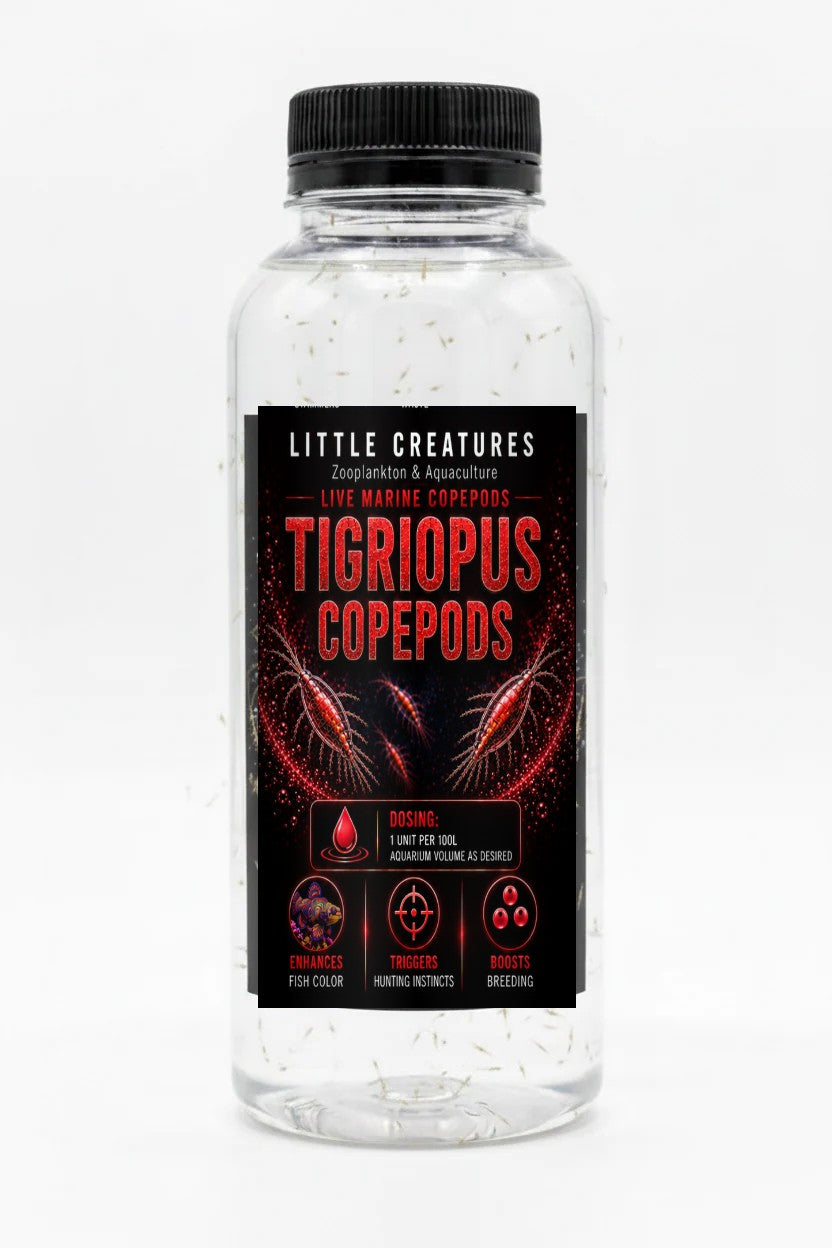
Live Tigriopus Copepods
Tiggor Pods · Lab‑cultured in NSW · Premium reef microfauna
Freshly cultured Tigriopus copepods (Tigriopus sp.) from our Castle Hill, NSW facility. A large, hardy copepod rich in essential fatty acids, carotenoids and natural pigments, and one of the most nutritious live feeds you can offer a reef. Ideal for mandarins, dragonets, seahorses, pipefish and wrasses.
- Behaviour: Active swimmers and crawlers, highly visible, reef‑safe.
- Use: Target feeding, refugiums, and seeding new systems.
- Culture: Lab‑cultured in NSW.
Cultured by Little Creatures Zooplankton & Aquaculture
Australian‑owned microfauna facility in Castle Hill, NSW, with over a decade of hands‑on aquaculture experience and ongoing collaboration with algae consultants and established producers.
Key Benefits
- Feeds finicky fish: Their size and jerky swimming trigger strong feeding responses in mandarins, seahorses, pipefish and wrasses.
- Exceptional nutrition: Rich in fatty acids and natural carotenoids that support growth and colouration.
- Hardy by nature: Tolerant of a wide range of temperatures and salinities, so they arrive and settle in strong.
- Single‑strain purity: No mixed strains unless clearly stated.
- Arrive‑alive guarantee: Replacement offered if arrival is disappointing.

Bottle Details
- Culture type: Live Tigriopus copepods with nauplii.
- Use window: Dose soon after arrival; refrigerate short‑term.
- Best time to dose: Into the refugium for a lasting population, or target feed into the display with pumps off.
For full dosing instructions, see our guide: Copepod Dosing – Seeding & Maintenance.
Best Phytoplankton to Pair With Tigriopus
For long‑term stability and reproduction, feed Tigriopus copepods with live phytoplankton.
- Nannochloropsis: Small cell size, nutrient uptake. Shop Nannochloropsis
- Hulk Juice (3‑strain): Broad‑spectrum microfauna support. Hulk Juice Guide
- Gold Rush: Ideal for pod‑heavy systems. Gold Rush Guide
- Reef’s Choice (6‑strain): Maximum biodiversity. Reef’s Choice Guide
Bundles available: Copepod & Phytoplankton Packs.
Frequently Asked Questions
How long do Tigriopus copepods survive in transit?
They remain viable for several days. Refrigerate on arrival and dose soon after.
Can I culture Tigriopus copepods at home?
Yes. They are one of the easiest copepods to culture. With live phytoplankton feeding and gentle aeration, they do well in dedicated vessels.
Will they establish in my display tank?
Because of their larger size, Tigriopus are quickly eaten or removed by filtration. For a lasting population, keep them in a refugium or nutrient‑rich sump and top up regularly. In ultra‑clean systems, pair them with Tisbe copepods for long‑term stability.
Do I need phytoplankton for them to survive?
They can survive short‑term without phytoplankton, but regular phyto feeding is strongly recommended for reproduction and long‑term stability.
Add Tigriopus to Your Reef
Choose live Tigriopus copepods alone or build a pods + phytoplankton pack for long‑term microfauna support.
Our live copepod range: Tisbe · Tigriopus · Oithona · Apocyclops · Calanoid · Mixed